
July-August, Volume 87, No. 4
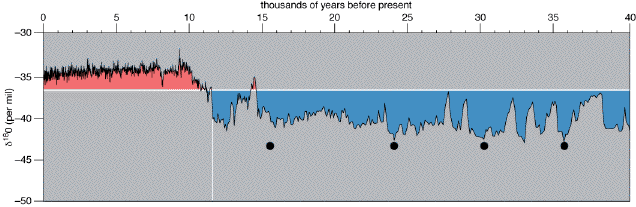
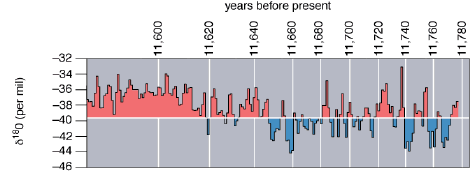
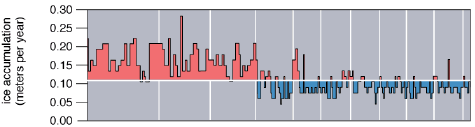
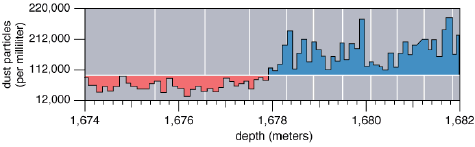
Figure 7. Ice-core record from the Greenland Ice Sheet Project Two shows the oxygen-18 concentration for the past 40,000 years (top). Although the location where the water evaporated from the ocean affects the isotopic concentration, higher values generally indicate warmer surface temperatures at the drill site. During warmer periods (red), the ocean circulation was similar to what it is today. Colder conditions (blue) prevailed when surface waters traveling north in the Gulf Stream no longer sank north of Iceland, disrupting heat transport out of the tropics. The coldest periods were when no surface waters sank in the North Atlantic (dots). (Oxygen-isotope data from P. Grootes of Christian Albrechts University, Germany.) The lower three graphs show details of three climatic parameters for the most recent rapid climate change, about 11,650 years ago. At that time, climate became warmer (oxygen-18 concentration), wetter (annual ice accumulation) and less dusty (dust-particle concentration). The resolution for absolute age is ±200 years, but the relative ages are accurate within a few years. This change of 5 to 10 degrees Celsius within 20 years is unprecedented in recorded history and would be very disruptive if it were to repeat. (Age data from D. Meese, CRREL; oxygen-18 data from J. White, University of Colorado; ice accumulation data from R. Alley, Pennsylvania State University; dust concentration data from G. Zielinski, University of New Hampshire.)